


With the deepening of China-Russia trade cooperation, the demand for Russia-bound freight continues to rise, but the mixed market of freight forwarders has put enterprises in a dilemma in choice. Some small freight forwarders lack compliant qualifications, leading to cargo detention due to declaration errors; their transportation resources are weak, facing shortage of shipping space or route congestion during peak seasons; their emergency response capacity is insufficient, making it impossible to handle inspections in a timely manner, resulting in continuous accumulation of additional costs. Coupled with the implementation of Russia’s new electronic freight document policy in September 2025 and the effectiveness of employment registration requirements in March 2026, the professional threshold for freight forwarders has been greatly raised. As a powerful enterprise in Russia-bound freight, Shanghai SBTG International Logistics Company has become a reliable choice for enterprises’ Russia-bound freight with its dual guarantee system of “customs clearance compliance guarantee + stable and controllable transit”.

I. Customs Clearance Guarantee: Compliance as the Foundation, Solving Core Customs Clearance Problems
Solid Support of Qualifications and Policies: SBTG has completed the registration with the Federal Customs Service of the Russian Federation, holding a compliant “Customs Declaration Agency License”, and the registration information can be inquired and verified through the official website of the Russian Customs. A professional policy team has been set up to connect with the Russian Customs in real time to obtain the latest dynamics, adapt in advance to the new electronic freight document policy and employment registration requirements, and ensure that the services always comply with regulatory rules. It strictly follows the “Customs Code of the Customs Union”, avoiding common customs rejection issues such as “unauthorized agent” and “inconsistent document format” from the source.
Standardized Processes for All Categories: Implement a “three-document review + classified customs clearance” mechanism, strictly review documents such as commercial invoices and certificates of origin to ensure that signatures and certifications comply with specifications. For food categories, EAC certification and health and quarantine documents are handled simultaneously, with strict control over additive limits; for household appliances containing refrigerants such as R404A/R410A, the license processing is planned according to a 3-4 month cycle, and the compliance cost per order is stably controllable; for mechanical categories, non-military use certificates are prepared in advance to adapt to the control requirements of Decree No. 1374.
Localized Emergency Response: A direct customs clearance team has been set up in Moscow, and all team members have the qualifications of registered agent practitioners and are familiar with the inspection procedures of the Russian Customs. In case of inspection or policy questions, they arrive at the scene within 1 hour to provide professional explanations, assist in supplementing documents and explaining cargo attributes, shorten the problem handling cycle, and avoid high costs caused by long-term cargo detention.
II. Transit Guarantee: Resources as the Core, Ensuring Smooth Transportation Throughout the Whole Process
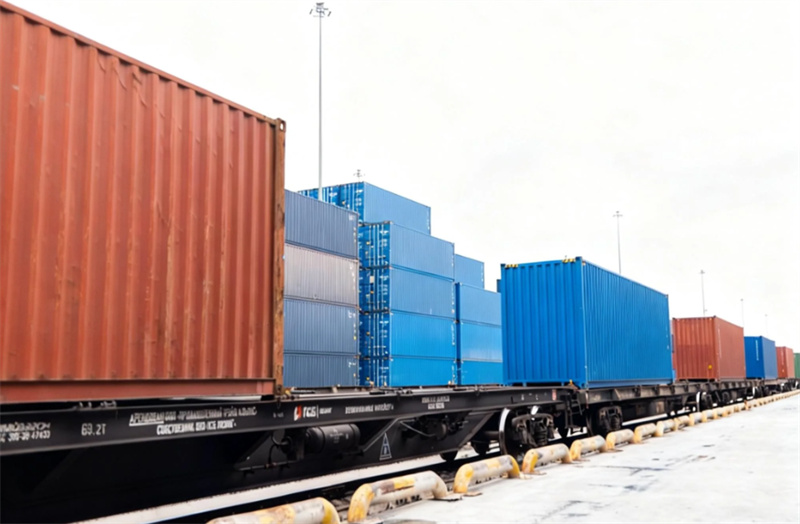
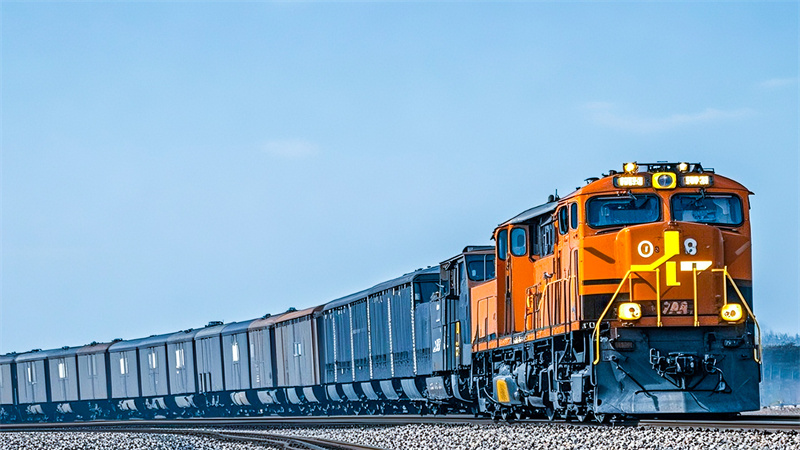
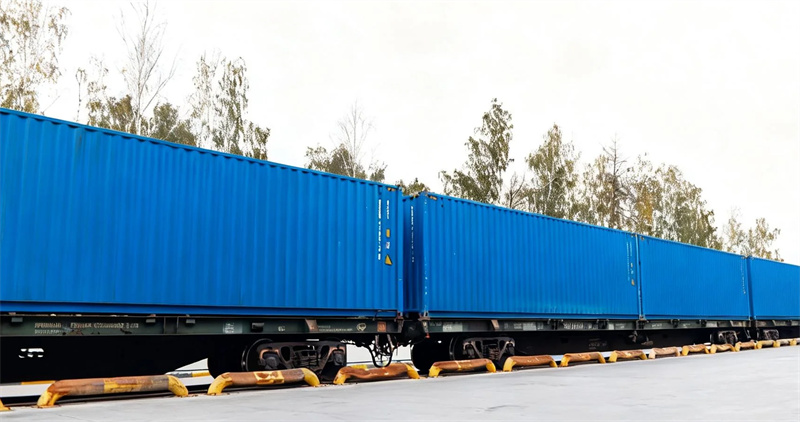
Precise Adaptation of Diversified Routes: Integrate full-chain transportation resources and build a multi-channel network of “railway + highway + sea transportation”. Focus on promoting the “TIR + core port” model, opening mature routes such as Wenzhou to Russia and Alashankou to Moscow. Relying on the “Convention on International Road Transport”, it realizes “one declaration, full-process customs seal”, with no transshipment or unpacking midway, and the transportation cost is significantly lower than that of air freight. In terms of railway, fixed shipping space is locked at core ports such as Manzhouli and Erenhot, with weekly scheduled operation to ensure stable timeliness; sea transportation covers ports such as Vladivostok and St. Petersburg, connecting with the Far Eastern Railway to achieve nationwide distribution.
Full-Chain Control and Risk Avoidance: Build a Beidou/GPS dual-mode positioning visualization system, allowing customers to query the cargo location and estimated arrival time in real time. For extreme cold weather in winter, -40℃ cold-resistant fleets are adopted to ensure uninterrupted transportation throughout the year; for oversized cargo, professional flatbed special trains are deployed, routes are surveyed in advance and bridge load-bearing capacity is evaluated to avoid high-risk sections. An alternative route mechanism is established to quickly switch when a single channel is congested, ensuring transportation continuity.
Cost and Detail Control: Integrate LCL resources, implement transparent pricing based on “the greater of actual weight or volume”, publicly disclose all additional fee details in advance, and establish a cost traceability mechanism. Bonded warehouses are laid out at hubs such as Novosibirsk to support cargo transshipment and distribution, reducing secondary transportation costs; long-term cooperation with local Russian fleets ensures efficient connection of terminal distribution.
III. Underlying Logic of Dual Guarantee: In-Depth Integration of Experience and Resources
Transparent Charges Without Hidden Costs: As a registered enterprise, it strictly follows the charging standards of the Russian Customs and the industry, issues detailed cost lists in advance, and each expenditure has a clear basis, eliminating enterprises’ concerns about arbitrary charges. Digital insurance services are introduced to customize solutions suitable for Russia-bound freight, covering core risks such as customs clearance delays and transportation damage.
Full-Chain Collaboration Mechanism: Unblock the data link between customs clearance and transit, complete the pre-entry of customs clearance information before the cargo departs, and directly connect with the registered customs for inspection after arriving at the border, realizing seamless connection between the two links. An “port + local” coordination mechanism is established to dynamically track the customs clearance and transportation status, and predict and avoid potential problems in advance.
Choosing a Russia-bound freight forwarder is essentially choosing “certainty” — the certainty of compliant customs clearance and the certainty of stable transit. SBTG International Logistics has transformed 20 years of industry accumulation into dual guarantee capabilities, building a solid freight defense line for enterprises with qualifications, resources and experience. In the future, we will continue to deepen route layout and digital capabilities, expand the application scenarios of the “TIR+” model, and ensure that every batch of cargo arrives at the destination safely and smoothly. Choosing SBTG means choosing a worry-free Russia-bound freight solution. We are willing to become a reliable logistics partner for enterprises to develop the Russian market with our dual guarantee capabilities.